
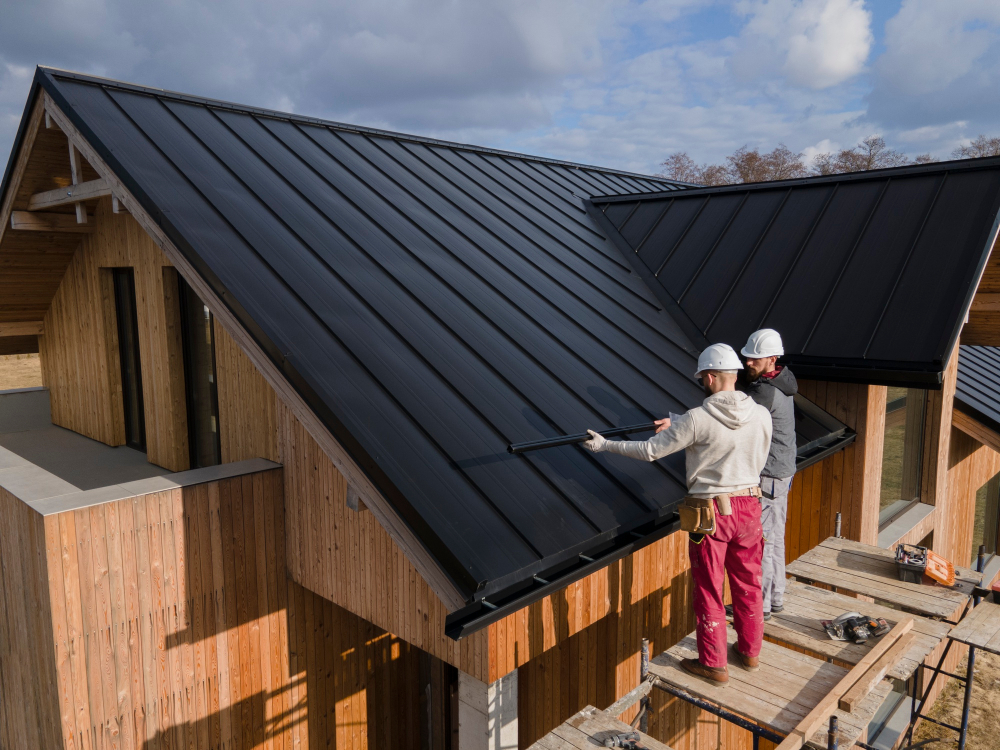
A roof replacement in the USA costs about $5,900 to $13,371 for many typical homes, with a current average of roughly $9,605, according to HomeAdvisor’s 2026 data. Angi reports a similar national average of $9,605, while Forbes Home places its average around $11,500, showing why roof size, material, roof pitch, labor, and location matter so much.
For a typical asphalt-shingle roof, homeowners should generally budget around $4 to $11 per square foot installed. Premium materials such as slate, copper, and specialty tile can push the price far higher.
Key Takeaway
| For most homeowners, $9,605 to $11,500 is a reasonable national-average starting point for roof replacement in 2026, while a broader planning range of $5,900 to $13,371 covers many standard projects. The final number should come from your actual roof area, material, pitch, local labor market, tear-off requirements, decking condition, permits, and installation scope. Get multiple written estimates and compare the complete roofing system not just the price per square. |
Average Roof Replacement Cost in 2026
The national average is useful for budgeting, but it should not be treated as a guaranteed quote. HomeAdvisor reports a typical replacement range of $5,900 to $13,371, with an average of $9,605.
Forbes Home reports a broader range of approximately $6,700 to $80,000, with an average near $11,500. The much higher upper range reflects expensive materials, large homes, complex roof designs, and specialty installations.
| Roof Replacement Factor | Typical 2026 Cost |
|---|
| National average | About $9,605–$11,500 |
| Typical replacement range | $5,900–$13,371 |
| Common installed cost | $4–$11 per sq. ft. |
| Average per roofing square | About $400–$1,100 |
| Premium/specialty roofing | Can exceed $40 per sq. ft. |
| Old roof removal | Often $1,500–$4,500 |
Roof Replacement Cost by House Size
Larger houses generally require more roofing material, labor, underlayment, flashing, fasteners, and disposal. However, the roof’s actual measured area is more important than the home’s advertised square footage.
HomeAdvisor’s 2026 figures illustrate how quickly costs increase as roof size grows. A roof around 1,800 square feet is listed at approximately $8,800 to $22,100, while a 2,685-square-foot roof can reach roughly $11,700 to $29,500.
| Approx. Roof Area | Estimated Replacement Cost |
| 1,120 sq. ft. | $4,900–$12,300 |
| 1,565 sq. ft. | $6,800–$17,200 |
| 1,800 sq. ft. | $8,800–$22,100 |
| 2,235 sq. ft. | $9,700–$24,600 |
| 2,685 sq. ft. | $11,700–$29,500 |
| 3,130 sq. ft. | $13,600–$34,400 |
| 3,580 sq. ft. | $15,600–$39,400 |
These are budgeting ranges rather than contractor quotes. A simple ranch roof may fall toward the lower end, while a steep roof with multiple valleys and dormers can move toward the upper end.
What Is a Roofing Square?
Roofers usually price roofing materials using “squares.” One roofing square equals 100 square feet of roof surface.
For example, a roof measuring 2,000 square feet contains approximately 20 roofing squares. If an installed roofing system costs $600 per square, the base roofing calculation would be about $12,000 before unusual structural repairs or additional project costs.
This measurement makes contractor quotes easier to compare. Ask every roofer to provide the estimated number of squares along with material, labor, tear-off, disposal, flashing, ventilation, and other charges.
Roof Replacement Cost by Roofing Material
Material selection can change the project price dramatically. Asphalt shingles remain one of the most common residential choices because they offer a relatively low installation cost and broad availability.
Premium materials cost more upfront but may provide different durability, appearance, fire resistance, weather performance, or expected service life.
Asphalt Shingle Roof Cost
Asphalt shingles are generally the most budget-friendly mainstream roofing option. Typical installed roof replacement costs commonly fall within the broader $4 to $11 per square foot range reported by HomeAdvisor and Forbes, depending on shingle grade, roof complexity, labor, and location.
Homeowners can choose from basic three-tab shingles, architectural shingles, and premium designer products. Architectural shingles generally provide a more dimensional appearance and can offer stronger warranties than basic entry-level products.
Common manufacturer examples include GAF, CertainTeed, Owens Corning, and IKO. Product specifications, warranty requirements, wind ratings, and installation instructions vary, so homeowners should compare the complete roofing system rather than selecting a shingle based only on price.
Metal Roof Cost
Metal roofing typically costs more than standard asphalt shingles. Standing-seam metal requires specialized installation and careful detailing around penetrations, valleys, edges, and flashing.
Steel and aluminum are common residential options. Copper is considerably more expensive and is generally selected for architectural appearance or specialty applications rather than minimum-cost replacement.
Metal can make sense for homeowners planning to remain in the property for many years. However, compare the upfront cost with expected service life, maintenance requirements, local weather conditions, and warranty coverage.
Tile Roof Cost
Clay and concrete tile roofs can be substantially more expensive than asphalt shingles. The material itself is heavier, and the existing roof structure may need evaluation before installation.
Tile is particularly common in parts of the Southwest, Southeast, and other regions where architectural style and climate make it practical. Installation also requires experienced roofing contractors because broken tiles, flashing problems, and underlayment failures can create expensive water damage.
Slate Roof Cost
Natural slate is one of the premium roofing materials. Forbes notes that specialty roofing can contribute to replacement prices reaching tens of thousands of dollars.
Slate can provide exceptional longevity when properly installed and maintained. However, it is heavy, expensive, and requires contractors experienced with slate roofing.
For older homes, replacing slate with asphalt may also change the home’s appearance and potentially affect historic-character considerations. Check local requirements before changing the roofing material on a historically designated property.
Main Factors That Affect Roof Replacement Cost
Roofing estimates vary because contractors are pricing more than shingles. The complete roofing system includes materials, labor, removal, preparation, ventilation, flashing, and cleanup.
Roof Pitch and Complexity
A steep roof costs more to replace because workers need additional safety equipment, setup time, and specialized procedures. A simple gable roof is generally easier to work on than a complicated roof with several intersecting sections.
Dormers, skylights, chimneys, valleys, multiple roof planes, and difficult access can increase labor. These features also create additional locations where flashing and water-management details must be installed correctly.
Tear-Off and Disposal
Removing an existing roof can represent a significant portion of the project. HomeAdvisor reports about $1,500 to $4,500 for removal and disposal in its 2026 replacement-cost guidance.
The final amount depends on the number of existing roofing layers, roof size, local disposal fees, labor, and whether additional materials need removal.
Never assume that a contractor’s advertised price includes complete tear-off. Check the estimate carefully.
Roof Decking Replacement
Roof decking or sheathing sits beneath the underlayment and roofing material. If contractors discover rotten, water-damaged, or structurally compromised decking, sections may need replacement.
This cost is difficult to estimate accurately before the old roof is removed. A contractor can inspect visible areas, but hidden damage may not become obvious until the roofing layers are opened.
Flashing and Ventilation
Flashing protects vulnerable areas around chimneys, walls, skylights, valleys, and roof penetrations. Poor flashing can allow water to enter even when the shingles themselves look new.
Roof ventilation is also important. The roofing system should be designed around appropriate intake and exhaust ventilation, along with the home’s insulation and attic configuration.
Labor and Local Market Conditions
Labor costs differ substantially across the United States. Metropolitan areas with higher wages and overhead can produce higher roofing estimates than lower-cost markets.
Location also affects weather requirements, building codes, material availability, insurance requirements, and contractor demand. Therefore, a national average should only be the starting point for your budget.
Hidden Roof Replacement Costs to Watch For
The advertised roof price is not always the final project price. Several smaller items can add hundreds or thousands of dollars.
Potential additional expenses include:
- Old roof removal and disposal
- Damaged roof decking
- New flashing
- Chimney flashing repairs
- Skylight flashing
- Pipe boot replacement
- Ridge vents
- Soffit or fascia repairs
- Drip edge
- Ice and water protection
- Underlayment upgrades
- Attic ventilation improvements
- Gutter removal and reinstallation
- Permit fees
- Structural repairs
- Additional insulation
- Post-installation inspection
Angi specifically recommends accounting for permit fees, old-roof removal, dumpster rental, inspections, and warranty coverage when preparing a replacement
Roof Repair vs. Full Replacement
Not every damaged roof needs complete replacement. A relatively new roof with isolated damage may be a better candidate for repair.
HomeAdvisor’s 2026 repair data places typical roof repair costs at $395 to $1,965, with an average of approximately $1,172. More extensive repairs can reach about $8,000.
Replacement becomes more reasonable when damage is widespread, the roof is near the end of its useful life, multiple areas are leaking, or the underlying roof system has significant deterioration.
A licensed roofing professional should inspect the roof before you make a major financial decision. For structural damage, sagging, or suspected problems with roof framing, involve an appropriately licensed contractor or structural professional.
Final Roof Replacement Cost Estimate for 2026
The average roof replacement cost in the USA in 2026 is roughly $9,605 to $11,500, but many homeowners should expect a broader range of approximately $5,900 to $13,371 for standard replacement projects. Specialty roofs, large homes, complicated designs, premium materials, and structural repairs can push costs much higher.
For a typical asphalt roof, use $4 to $11 per square foot installed as a starting national benchmark. Then adjust for roof pitch, actual roof area, tear-off, labor rates, decking condition, permits, material grade, and local weather requirements.
The most reliable way to determine your actual cost is to get multiple detailed estimates based on an on-site roof measurement. A professional inspection can also reveal problems that cannot be seen from the ground.
Frequently Asked Questions
Q: How much does a roof replacement cost in the USA in 2026?
A: HomeAdvisor reports an average roof replacement cost of about $9,605, with typical projects ranging from $5,900 to $13,371. Forbes Home reports an average near $11,500, so actual costs vary considerably by material, roof size, location, and complexity.
Q: How much does a 2,000-square-foot roof cost to replace?
A: A 2,000-square-foot roof would contain about 20 roofing squares. Using the common $4 to $11 per-square-foot range produces a rough baseline of $8,000 to $22,000, before unusual structural work or specialty materials.
Q: What is the cheapest roofing material?
A: Asphalt shingles are generally among the least expensive mainstream residential roofing materials. Their final cost depends on shingle grade, roof complexity, labor, tear-off, and local market conditions.
Q: Is it cheaper to repair or replace a roof?
A: Repair is usually cheaper when damage is limited and the existing roof still has useful service life. HomeAdvisor reports typical roof repairs at $395 to $1,965, compared with thousands of dollars for a complete replacement.
Q: Does roof replacement include removing the old roof?
A: It depends on the contractor’s estimate. HomeAdvisor reports that removal and disposal can add roughly $1,500 to $4,500, so homeowners should confirm whether tear-off and disposal are included.
Q: Do I need a permit to replace my roof?
A: Permit requirements vary by city, county, and state. Local building departments determine which requirements apply, while adopted residential codes establish technical requirements for roof assemblies and reroofing.
Q: What increases the cost of roof replacement the most?
A: Roof size, material, pitch, labor, roof complexity, tear-off requirements, and location are major cost drivers. Damaged decking, flashing repairs, difficult access, premium materials, and code-related upgrades can also increase the final invoice.
Q: How long does a roof replacement take?
A: Many standard residential roof replacements can be completed within a few days, but project duration varies with roof size, weather, crew size, material, complexity, and required repairs. A contractor should provide a project schedule with the written estimate.
Q: Is a metal roof worth the higher cost?
A: Metal roofing can make sense when durability, appearance, weather performance, or long-term ownership matters more than the lowest initial price. Compare the complete installed price, expected service life, maintenance, warranty, and local climate before deciding.
Q: Should I replace the roof before selling my house?
A: Not necessarily. The decision depends on the roof’s remaining life, visible condition, local buyer expectations, and expected return on investment. If the roof has serious leaks or obvious deterioration, addressing the problem may make the home easier to sell and prevent inspection-related complications.
Q: What should a roofing estimate include?
A: A detailed estimate should identify roof measurements, material, tear-off, disposal, underlayment, flashing, ventilation, decking allowances, labor, permits, warranties, cleanup, and payment terms. Comparing these line items helps homeowners avoid choosing a quote that appears inexpensive only because important work was excluded.