
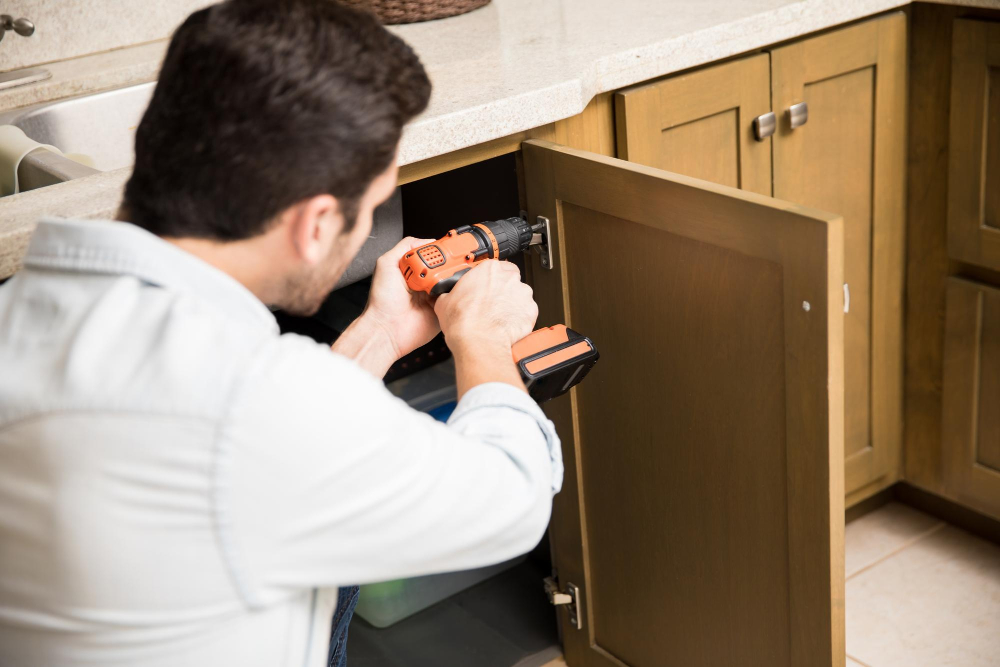
Installing cabinets can transform a kitchen’s functionality, storage, and overall appearance. This comprehensive guide explains how to install kitchen cabinets step by step, using a practical workflow that beginners can follow with confidence. It covers planning, tools, measuring, and installation techniques while maintaining safety and precision. By following these instructions, a homeowner can install cabinets correctly, avoid costly mistakes, and achieve a professional-looking result.
| This guide helps beginners install cabinets in a kitchen from start to finish. It explains the preparation process, outlines the cabinet installation tools list, and provides a clear path for installing upper and base cabinets. The article also highlights how to measure kitchen cabinets correctly, perform kitchen wall preparation, and ensure proper alignment. |
To install kitchen cabinets, follow these steps:
- Measure the kitchen space and mark the wall studs
- Plan the cabinet layout
- Draw level guidelines on the wall
- Install upper cabinets first
- Install base cabinets and level them
- Secure cabinets together and to the studs
- Attach doors, drawers, and hardware
- Make final adjustments and check alignment
Tools & Materials You’ll Need
Before starting, gather all essential items. A complete cabinet installation tools list ensures a smooth workflow and fewer interruptions.
Essential Tools
- Drill and screwdriver
- Tape measure
- Level (spirit or laser)
- Stud finder (for accurate stud finder usage)
- Clamps
- Pencil and chalk line
Optional Tools
- Cabinet jack or support lift
- Laser level for precision
Materials
- Cabinets (assembled or ready-to-assemble)
- Screws (cabinet-grade)
- Shims
- Filler strips
Having the right tools makes installation easier and ensures cabinets remain secure and aligned.
Before You Start (Preparation Phase)
Preparation plays a critical role in cabinet installation. Skipping this step leads to alignment issues and uneven cabinets.
Measure Your Space Correctly
To measure kitchen cabinets correctly, one must record:
- Wall width and height
- Floor level variations
- Ceiling height
Accurate measuring for upper cabinets ensures proper placement and spacing. Errors in measurement can cause gaps or misalignment.
Cabinet Layout Planning
Cabinet layout planning determines how cabinets will fit within the kitchen. It includes:
- Position of upper cabinets
- Base cabinet layout
- Appliance spacing
Proper cabinet layout planning ensures efficient workflow and prevents overcrowding.
Kitchen Wall Preparation
Kitchen wall preparation involves:
- Removing old cabinets
- Cleaning surfaces
- Repairing wall damage
Before installing, one should mark wall studs using a stud finder. Proper stud finder usage ensures cabinets are anchored securely.
Mark Guidelines on the Wall
Marking guidelines help maintain consistency during installation.
- Draw a horizontal line for upper cabinets
- Mark base cabinet height
- Identify and mark wall studs
Understanding standard cabinet height and depth is essential. Typically:
- Base cabinets: 34–36 inches high
- Upper cabinets: 18 inches above countertop
These guidelines ensure cabinets align correctly and maintain ergonomic spacing.
Install Upper Cabinets First
Professionals always install cabinets starting with the upper section. This approach prevents damage to base cabinets during installation.
Why Start with Upper Cabinets
Installing upper cabinets first allows easier access and reduces lifting difficulties. It also prevents accidental damage to lower units.
Step-by-Step Process
- Position the cabinet against the wall
- Use a level to ensure alignment
- Temporarily secure the cabinet
- Drill screws into marked studs
- Connect adjacent cabinets using clamps
During installation, ensure cabinets remain level and plumb. Misalignment at this stage can affect the entire kitchen layout.
Install Base Cabinets
After completing the upper cabinets, proceed to install cabinets at the base level.
Base Cabinet Layout
Base cabinet layout determines how cabinets align along the floor. Start with the corner cabinet and work outward.
Step-by-Step Process
- Place the first cabinet in position
- Use shims to level and plumb cabinets
- Secure the cabinet to the wall studs
- Attach neighboring cabinets
During installation, continuously check alignment using a level. Uneven floors often require adjustments with shims.
Align & Secure Cabinets Together
Once all cabinets are placed, alignment becomes critical.
- Tighten the screws between the cabinets
- Ensure uniform spacing
- Check vertical and horizontal alignment
To install cabinets properly, one must maintain consistent gaps and ensure all units sit flush. This step improves durability and appearance.
Install Doors, Drawers & Hardware
After structural installation, complete the finishing stage.
- Attach hinges carefully
- Install cabinet doors
- Fix handles and knobs
- Adjust alignment
Proper installation of hardware ensures smooth operation. Misaligned doors can affect usability and aesthetics.
Common Mistakes to Avoid
Beginners often make avoidable mistakes during installation.
- Failing to mark wall studs correctly
- Skipping leveling checks
- Incorrect measuring for upper cabinets
- Ignoring standard cabinet height and depth
Avoiding these mistakes ensures cabinets remain stable and aligned over time.
Safety Tips for Beginners
Safety should remain a priority while installing cabinets.
- Wear protective gear
- Use proper lifting techniques
- Avoid overloading cabinets
- Work with a partner when necessary
Safe installation practices prevent injuries and improve efficiency.
Cost Breakdown (DIY vs Professional)
Understanding costs helps homeowners decide whether to install cabinets themselves or hire experts.
DIY Costs
- Tools: Moderate one-time expense
- Materials: Depends on cabinet quality
Professional Installation
- Labor costs can be high
- Faster completion time
DIY installation saves money but requires effort and precision. Hiring professionals offers convenience but increases cost.
Conclusion
Installing kitchen cabinets requires careful planning, accurate measurement, and attention to detail. This guide explains how to measure kitchen cabinets correctly, perform cabinet layout planning, and execute each installation step efficiently. By following these instructions, a beginner can install cabinets with confidence and achieve a professional result.
From kitchen wall preparation to final adjustments, each stage plays a vital role. Proper installation techniques ensure cabinets remain durable, aligned, and visually appealing
FAQs
Can a beginner install kitchen cabinets?
Yes, beginners can install cabinets by following structured steps and using the right tools.
How long does installing take?
Most projects take one to three days, depending on the kitchen size.
Do cabinets need to be perfectly level?
Yes, one must level and plumb cabinets to ensure proper function and appearance.
What tools are essential?
A drill, level, and proper stud finder usage are essential for accurate installation.