
Introduction
A clean rug does more than improve the appearance of a home; it supports hygiene, comfort, and overall indoor air quality. Whether it’s an area rug in the living room, a kitchen rug, or an entryway rug in a high-traffic space, proper rug cleaning is essential for maintaining both beauty and durability.
Over time, rugs collect dust, allergens, spills, and odors. Without proper rug maintenance, these contaminants can damage fibers, dull colors, and even create health concerns. That’s why learning the proper method to clean rug surfaces is critical.
This step-by-step guide explains the most effective way to:
- Remove stains and eliminate odors
- Perform spot cleaning and deep cleaning
- Choose the right cleaning solution
- Protect fibers with safe technique practices
- Ensure correct drying for shrinkage prevention and mildew prevention
By following this proven approach, anyone can restore freshness, lift dirt, and extend the life of any rug—whether it’s a shag rug, cotton rug, or delicate natural fibers.
Understanding Your Rug Type Before Cleaning
Before starting any rug cleaning process, it is essential to understand the material. Different fibers require different cleaning strategies to ensure fiber safety and damage avoidance.
Common Rug Types
- Wool Care Rugs: Durable but require a gentle approach to avoid shrinkage
- Synthetic Fibers (polyester, nylon): Easier to wash the rug and maintain
- Cotton Rug: Lightweight and suitable for wet clean methods
- Natural Fibers (jute, sisal): Require low moisture and careful handling
- Delicate Rug / Vintage Car Rugs: Need extra care for color protection
Understanding color fastness is also important. Always perform a spot test before applying any cleaning solution to avoid fading or bleeding.
Essential Tools & Supplies for Rug Cleaning
Using the right tools ensures effective rug cleaning and prevents damage.
Basic Cleaning Tools
- Vacuum cleaner with strong suction power
- Soft brush for gentle scrub
- Clean cloth or microfiber towel
- Spray bottle for even application
- Rug beater for dust removal
Cleaning Products
- Mild rug shampoo
- Homemade vinegar mix
- Baking soda (acts as an odor neutralizer)
- Water (controlled use for low moisture cleaning)
Optional tools like a wet vac can help with faster drying and no residue results.
How to Clean a Rug at Home (Step-by-Step Guide)
Following a structured process ensures safe and effective rug cleaning.
Step 1: Vacuum First to Remove Surface Dirt
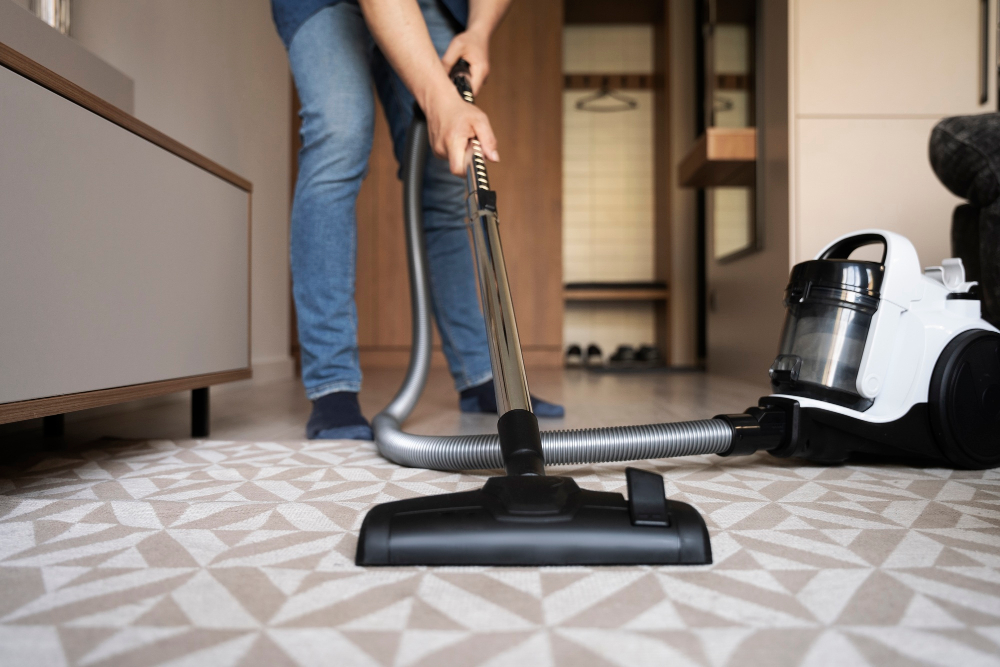
The first step is always to vacuum first. This removes loose dust and debris from the surface.
- Use strong suction power
- Clean both sides of the rug
- Use a rug beater for deeper dust removal
This step helps lift dirt and prepares the rug for deeper cleaning.
Step 2: Spot Test for Safety
Before applying any solution, perform a spot test.
- Apply a small amount of cleaning solution to a hidden area
- Check for discoloration or fiber damage
This ensures color protection and prevents costly mistakes.
Step 3: Spot Cleaning for Stains
For stains, start with spot cleaning instead of washing the entire rug.
How to Remove Stains:
- Use a clean cloth to blot the stain (never rub)
- Apply a mild cleaning solution
- Repeat until stains begin to fade
This safe technique helps remove stains without spreading them.
Step 4: Apply Cleaning Solution
For deeper cleaning:
- Mix water with rug shampoo or a vinegar mix
- Use a spray bottle for even application
- Use a soft brush for a gentle scrub
This helps refresh fibers and restore texture without damaging the rug.
Step 5: Rinse Thoroughly
After scrubbing, it is important to rinse thoroughly.
- Remove all soap to ensure no residue
- Use minimal water to maintain low moisture
Residue-free cleaning prevents stiffness and attracts less dirt in the future.
Step 6: Dry the Rug Properly
Drying is a critical step in rug care.
- Air dry in a ventilated area
- Use sunlight for sun drying, but avoid overexposure
- Ensure safe drying to prevent mold
Proper drying ensures quick dry, supports mildew prevention, and maintains shape.
Natural DIY Rug Cleaning Solutions
Natural cleaning methods are safe and eco-friendly.
Popular Solutions
- Vinegar mix: Helps eliminate odors
- Baking soda: Works as an odor neutralizer
- Lemon and salt: Helps with stain removal
These methods are recommended for households seeking chemical-free cleaning.
How to Clean Specific Types of Rugs
Different rugs require different cleaning strategies.
Wool Care Rugs
- Use minimal water
- Avoid harsh chemicals
- Use a gentle approach
Shag Rug Cleaning
- Use a vacuum with low suction
- Prevent tangling
- Focus on surface cleaning
Jute Cleaning & Sisal Care
- Avoid water exposure
- Use dry methods only
- Focus on fiber cleaning
Synthetic Fibers Rugs
- Safe for wet cleaning
- Easy to maintain
- Polyester safe cleaning methods work well
Cotton Rug Cleaning
- Machine washable in some cases
- Easy to wash the rug at home
Removing Common Rug Stains
Different stains require specific treatment.
- Common Stains & Solutions
- Food stains → mild detergent
- Pet stains → vinegar solution
- Oil stains → baking soda
- Ink stains → alcohol-based cleaner
Always blot stain and avoid rubbing for better results.
Rug Cleaning Mistakes to Avoid
Avoiding errors ensures long-term durability.
Common Mistakes
- Skipping the vacuum first step
- Using too much water (causes damage)
- Ignoring the spot test
- Improper drying (leads to mildew)
- Using harsh chemicals
These mistakes can damage fibers and reduce rug lifespan.
How Often Should You Clean a Rug?
Cleaning frequency depends on usage.
Recommended Schedule
- Weekly vacuuming
- Monthly surface cleaning
- Deep cleaning every 6–12 months
Rugs in high-traffic areas or pet zones require more frequent cleaning.
Professional Rug Cleaning vs DIY
DIY Cleaning
- Cost-effective
- Suitable for regular maintenance
Professional Cleaning
- Ideal for delicate or antique rugs
- Ensures deep fiber cleaning
Choosing the correct solution depends on rug type and condition.
Rug Maintenance Tips for Long-Term Care
Proper rug maintenance extends life and keeps rugs looking new.
- Maintenance Tips
- Rotate rugs regularly
- Use rug pads
- Clean spills immediately
- Avoid direct sunlight
These steps help prevent matting, protect fibers, and maintain appearance.
Additional Expert Tips for Better Results
- Use residue-free products
- Maintain color fastness
- Avoid over-scrubbing
- Ensure proper airflow for quick drying
Experts recommend a balanced approach combining deep cleaning and regular maintenance.
Conclusion
Learning how to clean rug surfaces properly is essential for maintaining a healthy and attractive home. From spot cleaning to deep cleaning, each step plays a role in preserving the rug’s beauty and functionality.
By using the proper method, following safe techniques, and ensuring correct drying, homeowners can effectively remove stains, eliminate odors, and refresh fibers. Whether dealing with a bathroom rug, indoor rug, or outdoor rug, consistent care ensures long-lasting performance.
FAQs
How do you clean a rug at home effectively?
By following proper steps like vacuuming, spot cleaning, applying the solution, and drying correctly.
Can you wash a rug completely?
Yes, depending on the material. Synthetic fibers and cotton rug types are easier to wash.
What is the best method for stain removal?
Use spot cleaning with a gentle scrub and always blot stain.
Does cleaning affect rug texture?
Yes, proper cleaning can restore texture and improve softness.