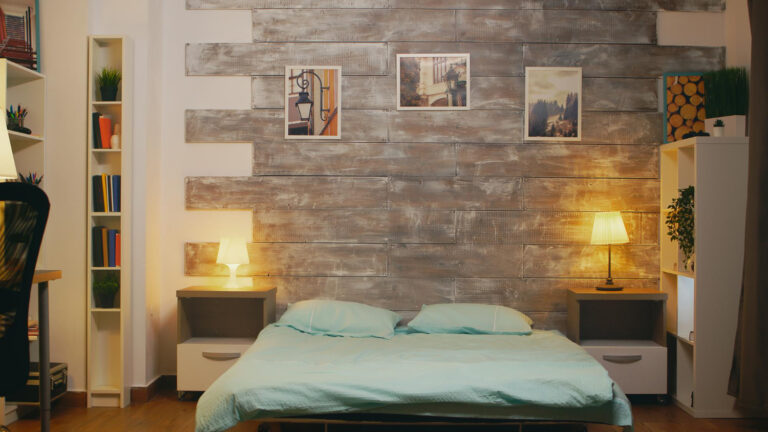

In the fast-paced, hyper-connected world of 2026, one interior design trend is rising above the rest, not with bold colors or futuristic tech, but with softness, warmth, and deep comfort. Enter the Cocoon Bedroom: a design philosophy rooted in sensory comfort, psychological safety, and mindful minimalism. From interior designers to mental health advocates, everyone is talking about cocoon bedrooms, and for good reason.
But what exactly is a cocoon bedroom? Why has it become the defining sleep sanctuary of 2026? And how can you create your own even on a modest budget?
Trend of Cocoon Bedroom 2026:
A cocoon bedroom is a sleep space intentionally designed to mimic the qualities of a protective, nurturing, and sensory-soothing environment, much like a silkworm’s cocoon. It prioritizes comfort, enclosure, warmth, softness, and emotional safety over aesthetics alone.
Unlike traditional “bedroom styling” that focuses on color palettes or furniture trends, the cocoon bedroom is rooted in biophilic design, neuroaesthetics, and sleep hygiene science. It’s not just how it looks, it’s how it makes you feel.
Key Takeaways
| 1: Designed for deep rest, not just looks. 2: Uses soft textures, warm dim lighting, and quiet acoustics to calm your nervous system. 3: Blocks of light, noise, and clutter are key triggers that disrupt sleep. 4: Backed by science: improves sleep, reduces anxiety, boosts daytime energy. 5: Affordable to start: blackout curtains, a weighted blanket, and no phones in bed make a big difference.6″ 6: Works in any space, dorms, tiny homes, or master suites. |
The goal? To signal to your nervous system: “You are safe. You can rest.”
Why 2026? The Perfect Storm of Cultural Shifts
The cocoon bedroom didn’t emerge in a vacuum. Its rise is the result of converging global trends:
The Sleep Crisis is Real and Worsening
According to the CDC (2025), nearly 1 in 3 adults in the U.S. gets less than 7 hours of sleep per night. Globally, insomnia rates have risen by 22% since 2020, per the World Health Organization’s 2025 Mental Health Report.
Meanwhile, the global sleep aids market is projected to hit $112 billion by 2026, yet people are increasingly seeking non-pharmaceutical solutions. Enter: environmental design.
Post-Pandemic Sanctuary Mindset
After years of uncertainty, remote work, and blurred home-life boundaries, people are redefining their bedrooms. A 2025 Houzz Bedroom Trends Report found that 78% of homeowners now view the bedroom as a “personal retreat” rather than just a place to sleep.
Digital Detox & Sensory Overload
With the average person exposed to over 10,000 digital stimuli per day (NeuroInsight, 2025), the brain craves refuge. Cocoon bedrooms offer a sensory reset, a counterbalance to the hyper-stimulation of modern life.
Social Media Amplification
Platforms like Pinterest and Instagram have seen a 340% year-over-year increase in searches for “cocoon bedroom” and “sensory bedroom” (Pinterest Predicts 2026). Viral videos showing “bed nest builds” and “calming room tours” have turned the trend into a global phenomenon.
The Science Behind the Cocoon: How It Impacts Your Brain & Body
This isn’t just aesthetic fluff; there’s hard neuroscience backing the cocoon effect.
Parasympathetic Activation
- Soft textures, warm lighting, and enclosed spaces activate the parasympathetic nervous system.
- This activation:
- Slows heart rate
- Lowers cortisol (the stress hormone)
- Prepares the body for restful sleep
- A 2024 study in Environmental Psychology found that people in “cocoon-like” bedrooms fell asleep 17 minutes faster than those in standard bedrooms.
Melatonin Optimization
- Blue light from screens suppresses melatonin, the hormone essential for sleep.
- Cocoon bedrooms use warm lighting (amber or red tones, below 3000K) that does not disrupt melatonin production.
- According to University of Oxford research (2025), using warm, dim lighting 90 minutes before bed can increase melatonin levels by up to 40%.
Noise Reduction & Sleep Architecture
Background noise disrupts deep (NREM) and REM sleep cycles. Cocoon bedrooms use layered textiles and acoustic panels to reduce ambient noise by 15–25 decibels, enough to prevent micro-awakenings that fragment sleep quality (Sleep Foundation, 2025).
Real-Life Impact: How Cocoon Bedrooms Are Changing Lives
Don’t just take our word for it, here’s what real people are experiencing:
After redesigning my bedroom with heavy blackout curtains, a weighted blanket, and zero electronics, my insomnia dropped from 4 nights a week to almost none. I wake up feeling like a human again.
— Maya R., 34, Graphic Designer (Chicago)
My teenager used to scroll until 2 a.m. Now, with soft lighting, a diffuser, and no phone charging in the room, they’re asleep by 10:30. Grades improved, mood is better—it’s been life-changing.
— David L., Parent (Austin)
How to Build Your Own Cocoon Bedroom in 2026: 7 Evidence-Based Tips
Ready to transform your space? Follow these expert-vetted, budget-conscious steps:
Prioritize Darkness (The 1 Sleep Trigger)
- Install blackout curtains (look for 100% light-blocking fabric).
- Cover or remove LED lights from electronics (use tape or smart plugs).
- Consider a sleep mask if total darkness isn’t possible
Pro Tip: Even small amounts of light (like a digital clock) can reduce melatonin by 50% (NIH, 2024).
Layer Textures for Sensory Comfort
- Start with a high-thread-count cotton or linen duvet.
- Add a weighted blanket (7–12% of your body weight).
- Include plush rugs, knit throws, and velvet or bouclé pillows.
Why it works: Tactile input activates the vagus nerve, promoting calm.
Control Sound & Create Acoustic Softness
- Use a white noise machine or brown noise app (less harsh than white noise).
- Add thick rugs, heavy curtains, and upholstered headboards to absorb sound.
- Avoid hard surfaces like tile or bare wood floors.
Embrace Warm, Dimmable Lighting
- Replace overhead lights with floor lamps or wall sconces.
- Use smart bulbs that shift from daylight (5000K) in the morning to candlelight (2200K) at night.
- Never use phones or tablets in bed, their blue light is sleep poison.
Minimize Visual Clutter
- Store clothes, books, and electronics out of sight.
- Choose furniture with clean lines and hidden storage.
- Keep surfaces clear; your brain registers clutter as “unfinished tasks.”
Integrate Calming Scents (Aromatherapy Done Right)
- Use an ultrasonic diffuser with lavender, bergamot, or cedarwood.
- Avoid synthetic fragrances, as they can trigger headaches.
- Try linen sprays with magnesium or chamomile for a fresh pillow.
Create a “Sleep Ritual Zone”
- Designate the last 30–60 minutes before bed as a device-free period.
- Keep a journal, gratitude list, or calming book on your nightstand.
- Use this space only for sleep and intimacy, no work, no scrolling.
Budget Note: You don’t need to renovate! Start with a $30 blackout curtain, a $50 weighted blanket, and a free brown noise playlist. Cocooning is about intention, not expense.
Cocoon Bedrooms Beyond the Home: Hotels, Dorms & Tiny Space
The trend is scaling fast:
- Marriott’s “Stillness Suites” (launched 2025) feature soundproof walls, circadian lighting, and organic cotton bedding.
- University dorms at NYU and UCLA now offer “cocoon pods” for students with anxiety.
- Tiny home designers are integrating loft beds with canopy curtains to maximize psychological space
Even in a 50 sq ft, you can cocoon: a curtain around your bed, a small rug, and a salt lamp can transform a corner into a retreat.
Final Thoughts:
In 2026, the cocoon bedroom isn’t just decor, it’s preventive healthcare. As stress, screen time, and sleep deprivation reach epidemic levels, designing a space that actively supports restoration isn’t indulgent; it’s essential.
By aligning your environment with your biology, you reclaim agency over your rest, mood, and mental clarity. And in a world that never stops buzzing, that’s revolutionary.
So tonight dim the lights, fluff your pillows, and step into your cocoon. Your future well-rested self will thank you.