
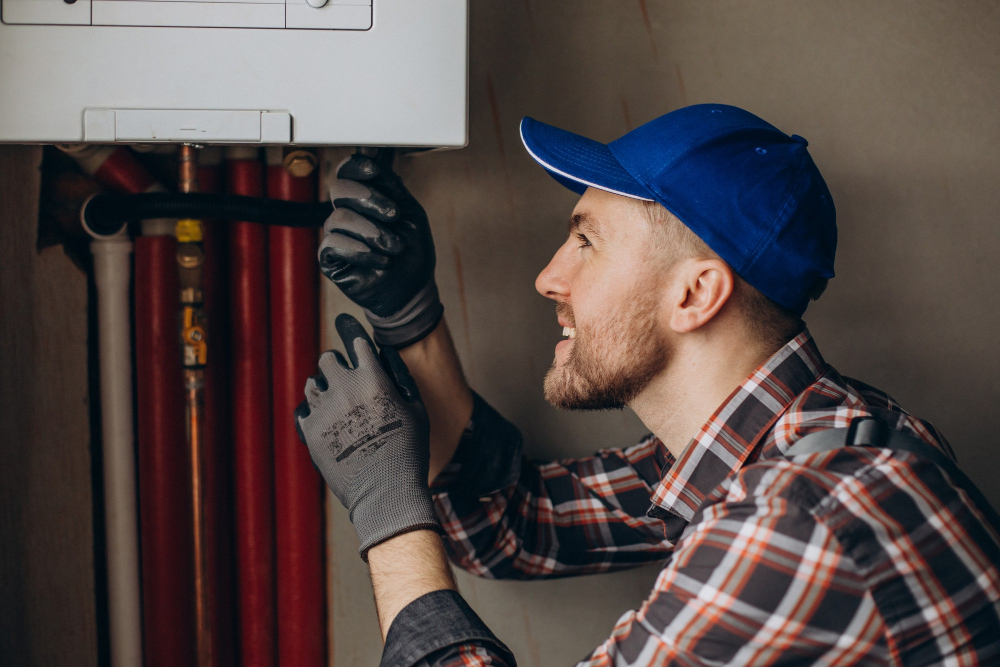
Most water heaters last 8 to 12 years for standard tank models and 18 to 20+ years for tankless units. Lifespan depends on fuel type, water quality, maintenance history, and usage. If your unit is past 8 years old and showing rust, leaks, or inconsistent heat, replacement is usually smarter than another repair.
Water Heater Lifespan by Type
Not every water heater ages the same way. Fuel source, tank design, and internal components all change how long a unit stays reliable.
Gas Water Heater Life Expectancy
A gas water heater typically lasts 8 to 12 years. The anode rod and tank lining wear down faster because gas units heat water through direct combustion, which stresses the tank more than electric heating elements do.
Sediment buildup at the bottom of the tank speeds up this wear. In homes with hard water, sediment can cut a gas unit’s lifespan by 2 to 3 years if the tank is never flushed.
Electric Water Heater Life Expectancy
Tankless water heaters last 18 to 20 years, sometimes up to 25 years with annual descaling. Since they heat water on demand instead of storing it, there’s no standing tank to rust or corrode.
Tankless units are more sensitive to hard water minerals. Skipping annual maintenance can shorten their lifespan by 5 years or more, according to manufacturer service data from major brands like Rheem and Rinnai.
Average Life of a Solar Water Heater
A solar water heater’s storage tank lasts 10 to 20 years, while the solar collectors themselves can last 20 to 25 years with proper upkeep. The tank component still follows standard wear patterns, but the panels rarely fail outright; they lose efficiency gradually.
Lifespan of a Commercial Water Heater
Commercial water heaters last 10 to 15 years on average, though heavy daily use in restaurants or apartment buildings can shorten that to 8 to 10 years. Commercial units cycle far more often than residential ones, so component fatigue happens sooner.
What Factors Affect Water Heater Lifespan?
Several conditions determine whether your unit hits the low end or high end of its expected range.
Water quality is the biggest factor. Hard water leaves mineral deposits inside the tank and heating elements, forcing the unit to work harder and corrode faster. Homes with hard water often see lifespans drop by 20-30% compared to homes with soft water.
Maintenance frequency matters just as much. Flushing the tank once a year removes sediment before it hardens. Homeowners who never flush their tank cut their average lifespan by roughly 3 years, based on plumbing industry service records.
Anode rod condition protects the tank from rust through a process called sacrificial corrosion. Once the anode rod is fully corroded, usually after 3 to 5 years, the tank itself starts rusting instead. Replacing the rod costs under $150 and can add years to the unit’s life.
Water pressure also plays a role. Pressure above 80 psi stresses tank seams and valves. A pressure-reducing valve, which costs around $200 installed, protects both your water heater and your pipes.
Usage volume shortens lifespan, too. A household of six running a water heater constantly wears it out faster than a household of two with the same unit.
Signs of a Failing Water Heater
Catching problems early is what separates a $300 repair from a $1,800 replacement.
- Rusty or discolored water coming from hot water taps, which signals internal tank corrosion
- Popping or rumbling noises during heating, caused by hardened sediment at the tank bottom
- Water pooling around the base of the unit, which usually means a tank crack or fitting failure
- Inconsistent water temperature that swings between hot and lukewarm during a single shower
- Lower hot water pressure than normal, often from mineral buildup restricting flow
- The unit’s age, since any tank water heater older than 10 years carries a higher failure risk regardless of symptoms
If you notice two or more of these signs together, it’s time to compare repair costs against a full replacement rather than waiting for a total failure.
Signs Your Water Heater Needs Repair
A water heater needs repair, not replacement, when the problem is isolated to one component and the tank itself is structurally sound. Signs that repair is enough include a faulty thermostat, a failed heating element, a broken pilot light, or a worn pressure relief valve.
These are individual parts, and swapping them out typically runs $150 to $600. The core tank, which is the expensive part to replace, stays intact and functional.
Repairing vs Replacing a Water Heater: What to Consider
Repairing an old water heater is worth it only if the unit is under 8 years old, the repair costs less than 50% of a new installation, and there’s no visible tank corrosion or leaking. Past that threshold, repairs become a pattern of throwing money at a unit that’s near failure anyway.
Plumbing contractors commonly apply the 50% rule: if a repair costs more than half of what a new water heater installation would cost, replacement is the better financial decision.
Repair vs. Replacement: How to Decide
| Factor | Repair Makes Sense | Replace Makes Sense |
|---|---|---|
| Unit age | Under 8 years | Over 10 years |
| Repair cost | Under 50% of the new unit cost | Over 50% of new unit cost |
| Tank condition | No rust or leaks | Visible rust, cracks, or leaks |
| Efficiency | Still meets household demand | Struggles to keep up with usage |
| Repair history | First or second repair | Third repair in 2 years |
Replace it once the tank shows physical damage, once repair costs stack up past the 50% threshold, or once the unit simply can’t keep up with your household’s hot water demand anymore.
How Much Does a New Water Heater Cost
A new water heater installation typically costs $1,200 to $2,500 for a standard tank unit, including labor. Tankless systems run higher, usually $3,000 to $4,500 installed, because of the added electrical or gas line work most homes need.
Fuel type changes the price too. Electric tank units are the cheapest to install since they skip venting work, while gas and propane models add $200 to $500 for proper venting and gas line connections. Solar water heaters cost the most upfront, often $5,000 to $10,000, but can cut water heating energy use by 50% or more over time.
These numbers matter directly for the 50% rule. If your gas water heater needs a $900 repair and a new unit costs $1,800, replacement is the clear winner both financially and for long-term reliability.
Extending Water Heater Lifespan Through Proper Maintenance
Four maintenance habits reliably add years to any water heater, regardless of fuel type.
- Flush the tank annually to remove sediment before it hardens and insulates the heating elements
- Test the pressure relief valve once a year by lifting the lever briefly to confirm it releases pressure properly
- Inspect and replace the anode rod every 3 to 5 years, or sooner in homes with softened water
- Insulate the tank and pipes to reduce strain from temperature loss, especially in unheated basements or garages
Homeowners who follow this routine typically get 2 to 4 extra years out of their unit compared to homeowners who never perform maintenance, based on manufacturer warranty claim data.
Making the Right Decision
A water heater’s lifespan comes down to type, maintenance, and water quality not just age alone. Track your unit’s repair history, flush the tank yearly, and apply the 50% rule when a repair bill comes in. That’s the clearest way to know whether you’re fixing a small problem or delaying an inevitable replacement.
Contentquery-fan-out.csvcsv
FAQs
How long does a water heater typically last?
Most tank water heaters last 8 to 12 years, while tankless models last 18 to 20 years or more. The exact lifespan depends on water quality, maintenance frequency, and usage volume.
What is the average lifespan of a water heater in a home?
The average residential water heater lasts about 10 years for gas and electric tank units. Homes with hard water or heavy daily use often see that number drop closer to 8 years.
How often should I replace my water heater?
Replace a tank water heater every 8 to 12 years, or sooner if it shows rust, leaks, or repeated repair needs. Tankless units can often run 15 to 20 years before replacement is necessary.
What factors determine water heater longevity?
Water hardness, maintenance history, anode rod condition, water pressure, and daily usage volume all determine how long a water heater lasts. Poor water quality combined with no maintenance is the fastest way to shorten a unit’s lifespan.
How do I know if my water heater is worth fixing?
Your water heater is worth fixing if it’s under 8 years old, the tank shows no rust or cracks, and the repair costs less than half the price of a new installation. Past that point, replacement typically saves more money long-term.